Showing posts with label gronenberg and leuchtag. Show all posts

Saturday, November 5, 2022

The 1922 303 Park Avenue South


In 1921 the newly formed 303 Fourth Avenue Corp. demolished the vintage buildings at 303 through 311 Fourth Avenue (renamed Park Avenue South in 1959), and 107 to 113 East 23rd Street.  The syndicate then hired the architectural firm of Gronenberg & Leuchtag to design a replacement store and showroom structure on the site.  The plans, filed in September, placed the construction costs at $110,000, or more than $1.6 million in 2022.

Groenberg & Leuchtag drew heavily on the waning Arts & Crafts style, the firm's spartan design featuring a triangular parapet on each elevation.  Incised, vertical lines set the corner section apart, its arcaded openings at the fourth floor creating the illusion of a tower.  Polychrome Arts & Crafts style tiles decorated the frieze below the corner cornice, while terra cotta tiles lined the roofline elsewhere.  The architects made an exception to the no-frills design with the avenue entrance.  Here the doorway was capped with a carved, Renaissance inspire entablature.  Flanking the window atop its cornice were two base relief sirens.


As the building rose, advertisements touted it as "suitable for haberdashery, shoes, hats and other wholesale & retail business."  The publicity worked.  On June 1, 1922, the New York Herald reported that the stationery firm Karnell & Meissner, Inc. had signed a 10-year lease "from plans."  And two days later, the Real Estate Record & Guide reported that the Tomados Confectionery Co., Inc. had taken space "in the building in course of construction."  That lease, too, was for 10 years.  Before the end of the year the Standex Optical Company took space, and the Times Square Auto Supply Co. leased the ground floor.

The H. P. Carr & Co. operated from the building in the 1930's.  In 1937 it received a patent for its Tutticurio tooth powder.  An advertisement promised it would "clean teeth with 100% safety.  Contains no soap or grit."  A "family size container" was available by mail for 25 cents.

The old address is announced in a plaque on the Park Avenue South facade.

The wide variety of tenants sometimes created strange bedfellows.  In the 1940's, 303 Fourth Avenue was home to the Garland Beauty School, which taught "beauty culture" as well as barbering.  Also in the building was the Socialist Party National Headquarters, which held meetings and published booklets and the weekly Socialist Party newspaper, The Call.   The headquarters would remain well into the 1950's.

This 1946 booklet gives the Socialist Party Headquarters address.

Also in the building at the time were the novelty, mail order firms Jerry Gottlieb, Inc., and Madison Mills, which touted its "Glow-In-The-Dark" specialties like "house numbers, pictures, plastic novelties, religious and nursery objects."
 
Beginning at mid-century, several design-related firms moved into the building.  By 1958 the Artists Design & Process Corporation was here, as well as the architectural and engineering firm of Greenberg & Ames.  By 1969 the related Ames Associates, architects and engineers, was listed here as well.  Humanities Press, Inc. occupied space from the mid-1960's to the 1980's.

The women's apparel shop, Toinettes, was in 303 Park Avenue South in the 1960's.  The Riverdale Press, September 8, 1968.

An unexpected tenant came in 1981.  On February 20, The New York Times reported, "The Cumeezi Clowns are at it again.  They will open their winter series of free entertainment at public sites this afternoon."  The article added, "If you're clown inclined, they teach--$40 for four classes--at 303 Park Avenue South."

The clown school was a hint at the changing personality of the district.  In 1989 Scuba Network was offering certification classes at its shop here.  Five years earlier, the art gallery 303 Gallery was founded in the building.  It would be a destination for art patrons for nearly three decades, not leaving until 2013.

Real change came in 1990's.  In 1997 sprawling residential loft spaces were being rented.  One potential renter described a 2,500-square-foot apartment to The New York Times journalist Barbara Whitaker in November that year as having "hardwood floors, an exposed brick wall and three pyramid-shaped skylights set into the 12-foot-high pressed tin ceiling."

A comprehensive renovation completed in 2004 resulted in a "physical culture establishment" on the first and second floors, and "apartments, offices, and artist studios" in the upper floors.
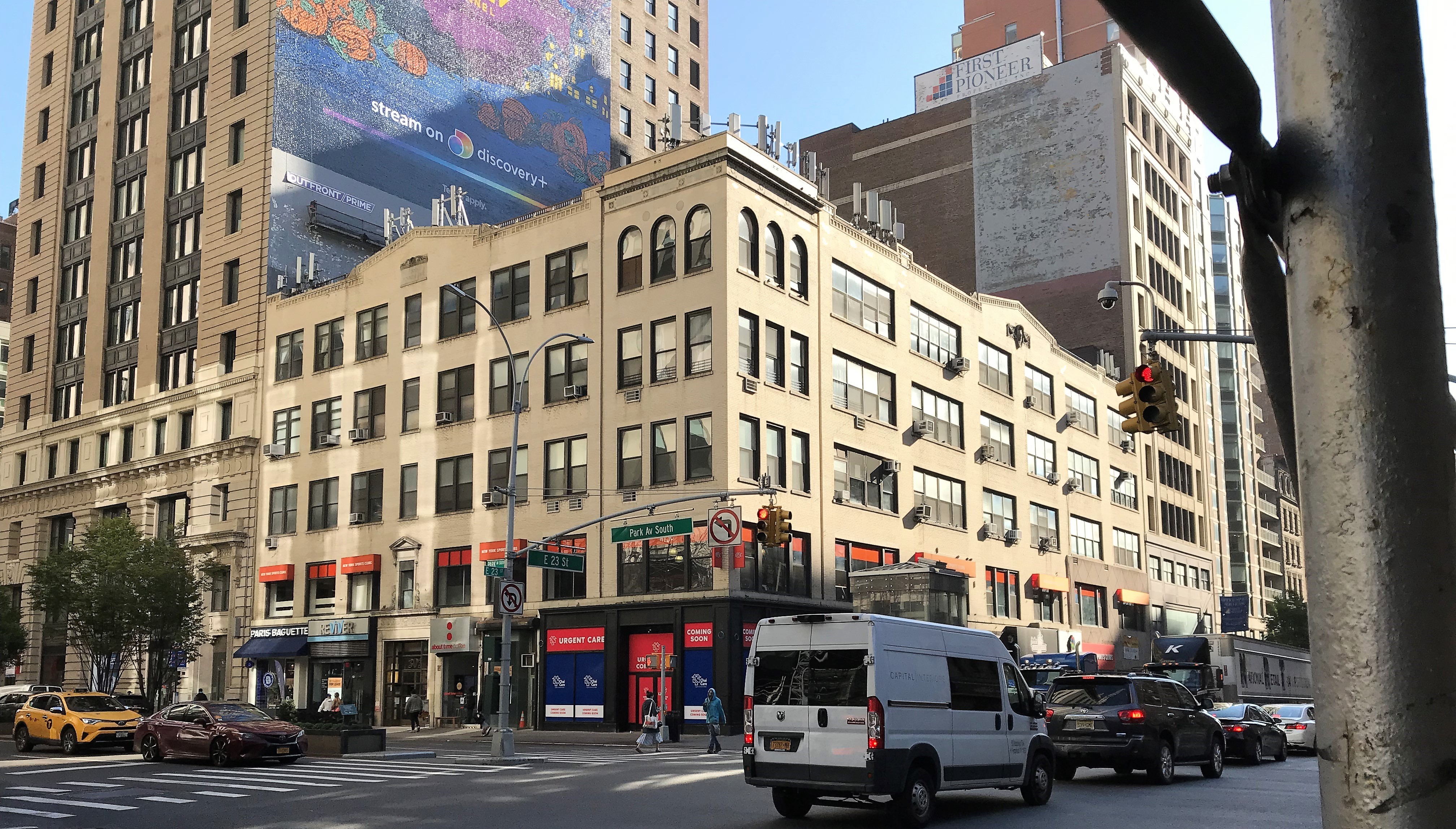

Other than the mutilated ground floor, Gronenberg & Leuchtag's 1922 building--which always looked more factory than showroom--is nearly unchanged after a century of disparate use.

photographs by the author
no permission to reuse the content of this blog has been granted to LaptrinhX.com

Tuesday, January 19, 2021

The Rutgers Club - 314 West 91st Street


In June 1892 mansion architect C. P. H. Gilbert filed plans for a four-story brick and stone residence for attorney Charles DeHart Brower.  Completed within the year, the 39-foot wide house cost Brower the equivalent of $580,000 in today's money.  A period photograph of an abutting structure gives tantalizing clues to its appearance--a red Roman brick facing and grouped stone-framed windows with colorful stained glass transoms.

Born on December 13, 1856 Charles had married Mary Holly Bailey on October 12, 1880.  The couple had three children, 8-year old Charles Ferguson, 7-year old Fannie, and Bailey, who was born in the new house on May 2, 1893.

Brower had been a member of Ye Olde Settlers' Association of Ye West Side since 1884, a social club for area residents.  He was also highly involved in the West End Association, a more activist group, staunchly defensive of the developing suburb which lobbied for improvements like sewers and mass transportation, and against "nuisances" like the city's proposal to use land below Riverside Drive for incinerating garbage.  He was, as well, a director and treasurer of the Ocean Trading Co., and a trustee of the Metropolitan Museum of Art.

The Brower country home was in Quogue, Long Island.  There Charles berthed his yacht, the Frontenac.  The craft was annually entered in the Westhampton Country Club regatta.   And by the time the younger Charles reached his 18th birthday, he too had a boat.  Father and son did very well in the regatta of 1902.   On August 10 the Brooklyn Daily Eagle reported "In class Q. sloop Frontenac, Charles Dehart Brower, was an easy winner, beating Winnabust over nine minutes, with Wampnissie third.  In class U. sloops, Lass, Charles Dehart Brower, jr., finished first and Atmaq, second."

In 1901 the West End Association began fighting with the Forty-second Street, Manhattanville & St. Nicholas Avenue Railway Company "against the maintenance of four tracks in Amsterdam Avenue, on the ground that the unused tracks are a nuisance as well as a menace to the public," as reported by The New York Times.  When nothing happened after five years, Charles DeHart Brower took the matter in to his own hands, suing the firm and seeking the forfeiture of its charter.

The younger Charles had graduated from Princeton in 1904 with a degree in electrical engineering.  The family was spending the holidays in Quogue in 1907 while Marian Childs was visiting the William E. Barnes family nearby.  The Sun mentioned that both Charles and Marian "are well known in New York society."  

It appears that the two were well-known to themselves as well, for on New Year's Eve Charles proposed that they elope.  The Sun explained it saying he "asked Miss Child's why they couldn't get married then and dispense with the marriage license and a lot of bother and fuss."  Within hours the two were married.  The article said "They and a few relatives got into Mr. Brower's automobile and the trip to Riverhead was made in a hurry."

Fanny's marriage to Harvey C. McClintock on November 11, 1911 was a more traditional affair.  It took place in the Quogue residence with the expected announcement, invitations, and guests.  The newlyweds moved into the West 91st Street house.

In the meantime, Mary Brower was involved in Upper West Side causes.  She was an officer in the Bloomingdale Day Nursery and a member of the Ladies' Association of the Sheltering Arms.  The Sheltering Arms was an institution founded to care for children six to twelve years old "for whom no other institution provides."  The children were not orphans, but placed there by parents or guardians who could not afford to care for them.

Around 1917 Charles Brower fell ill.  His condition worsened over a period of months and he died in the house on May 2, 1918 at the age of 62.

Two years later the Browers offered the residence for sale at $65,000--just under $830,000 in today's money.  The Real Estate Record & Builders' Guide reported that it sold for a startlingly higher amount, $85,000 and that "after extensive alterations will be occupied by the purchaser."

That purchaser was motion picture producer William Fox, founder in 1915 of the Fox Film Corporation.  He was also a director in the Motion Picture Producers and Distributors of America.  Born in Hungary as Vilmos Fuchs, his parents brought him to the United States when he was nine-months old.   His name is best remembered today in 20th Century Fox, Fox Broadcasting and similar firms.

Possibly because the motion picture industry was rapidly moving west to California, Fox's residency in the house was short lived.  In 1923 it was purchased by the Rutgers Club which hired architect Samuel Sass to do interior renovations.  Five years later the architectural firm of Gronenberg & Leuchtag completely remodeled the building, giving it a new neo-Romanesque facade.  Stone medieval-inspired corbels over the entrance and below the cornice, and inset heraldic shields provided contrast to the brown-red brick.  The center shield below the gable holds the club's monogram, RC.


From the beginning the Rutgers Club was used by Jewish groups, most notably Ivriah, a women's group which ran a Jewish education center in the building.  On February 15, 1923 the New York Post reported "One of the most unique collections of dolls in the world--representing dolls of twenty-five countries stretching from the inner-most sections of the Orient to the nations of Eastern and Central Europe--will be displayed by...the West Side Division of Ivriah at the Rutgers Club, 314 West Ninety-first Street."

And on April 22, 1934 the Jewish Telegraphic Agency reported on Ivriah's upcoming weekly meeting.  Leo Schwartz was to discuss "Jewish Problems and their solution" and Selma Start would speak on "Creative Listening to Music."

International Jewish issues continued to be addressed in lectures and meetings here.  On November 4, 1937 The New York Sun reported "A symposium on the proposed establishment of a Jewish State in Palestine has been arranged by the West Side Zionist District for next Monday evening at the Rutgers Club."

Little has changed to the exterior of the building since this photograph was shot around 1941.  via the NYC Dept of Records & Information Services

On August 2, 1943 The New York Sun announced that the Herzliah Hebrew Academy had purchased the building.  The article noted "the purchaser plans to extensively alter the building and occupy it for education purposes with a curriculum similar to that of a junior college."  The renovations, completed in 1944, resulted in an auditorium on the first floor, class rooms in the second and third, and offices on the top floor.

The Herzliah Hebrew Academy remained for more than two decades.  By the early 1970's the building had become the Walden School, a private school for grades 8 through 12, and in 1974 was home to the Center for Change, "a revolutionary health care and educational service organization," according to WorkForce magazine.

In 2005 The Ideal School of Manhattan was founded and moved into No. 314 West 91st Street.  The independent elementary school remains in the space.  And despite its many incarnations, the exterior is little changed since the Rutgers Club gave it a facelift in 1928.

photographs by the author